
Fly-Ash Testing
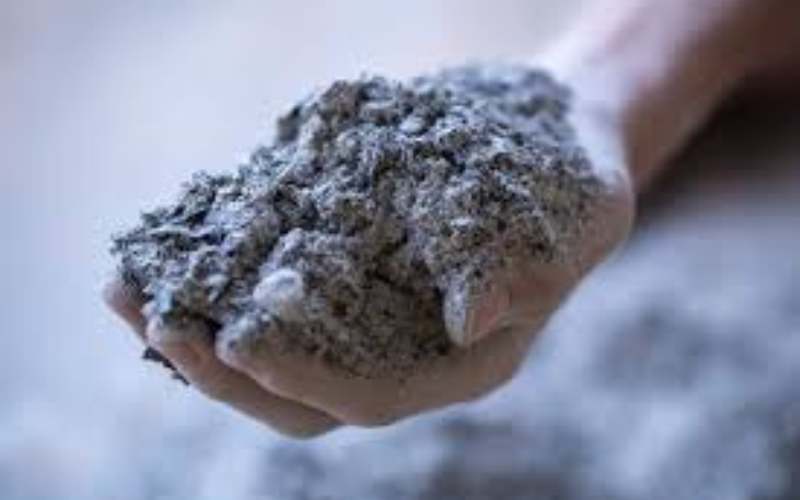
Fly-Ash Testing
Fly-Ash Testing is essential to evaluate the physical and chemical properties of fly ash used in cement, concrete, and other construction applications. At Vertex Testing Lab, we provide comprehensive fly-ash testing services as per IS standards and BIS specifications to ensure quality, performance, and compliance with construction requirements.
Our laboratory testing helps manufacturers, ready-mix concrete plants, and construction professionals ensure that fly ash contributes to strength, durability, and long-term performance of structures.
Importance of Fly-Ash Testing
Fly-ash testing helps to:
Ensure consistency and quality of fly ash
Improve strength and durability of concrete
Control setting time and workability
Maintain compliance with IS and BIS standards
Tests Conducted for Fly-Ash
Density
Determines the bulk density of fly ash to check uniformity and handling properties.
Specific Gravity
Measures the relative density of fly ash, indicating material quality and consistency.
Fineness
Evaluates particle size distribution which affects reactivity and strength development.
Compressive Strength
Determines the contribution of fly ash to strength when used in cement or mortar.
Lime Reactivity
Measures the pozzolanic activity of fly ash by assessing its reaction with lime.
Soundness
Checks volume stability to ensure fly ash does not cause expansion in concrete.
Passing 45 Micron Sieve
Determines the percentage of fine particles passing through a 45-micron sieve.
Loss on Ignition (LOI)
Indicates unburnt carbon content and overall quality of fly ash.
Silica (SiO₂)
Measures silica content responsible for strength and durability.
Sulphur Trioxide (SO₃)
Controls setting characteristics and prevents harmful expansion.
Total Chloride
Determines chloride content to prevent corrosion of reinforcement.
Available Alkali
Measures alkali content to control alkali–aggregate reaction in concrete.